What Broadmeadow’s transformation means for commercial property
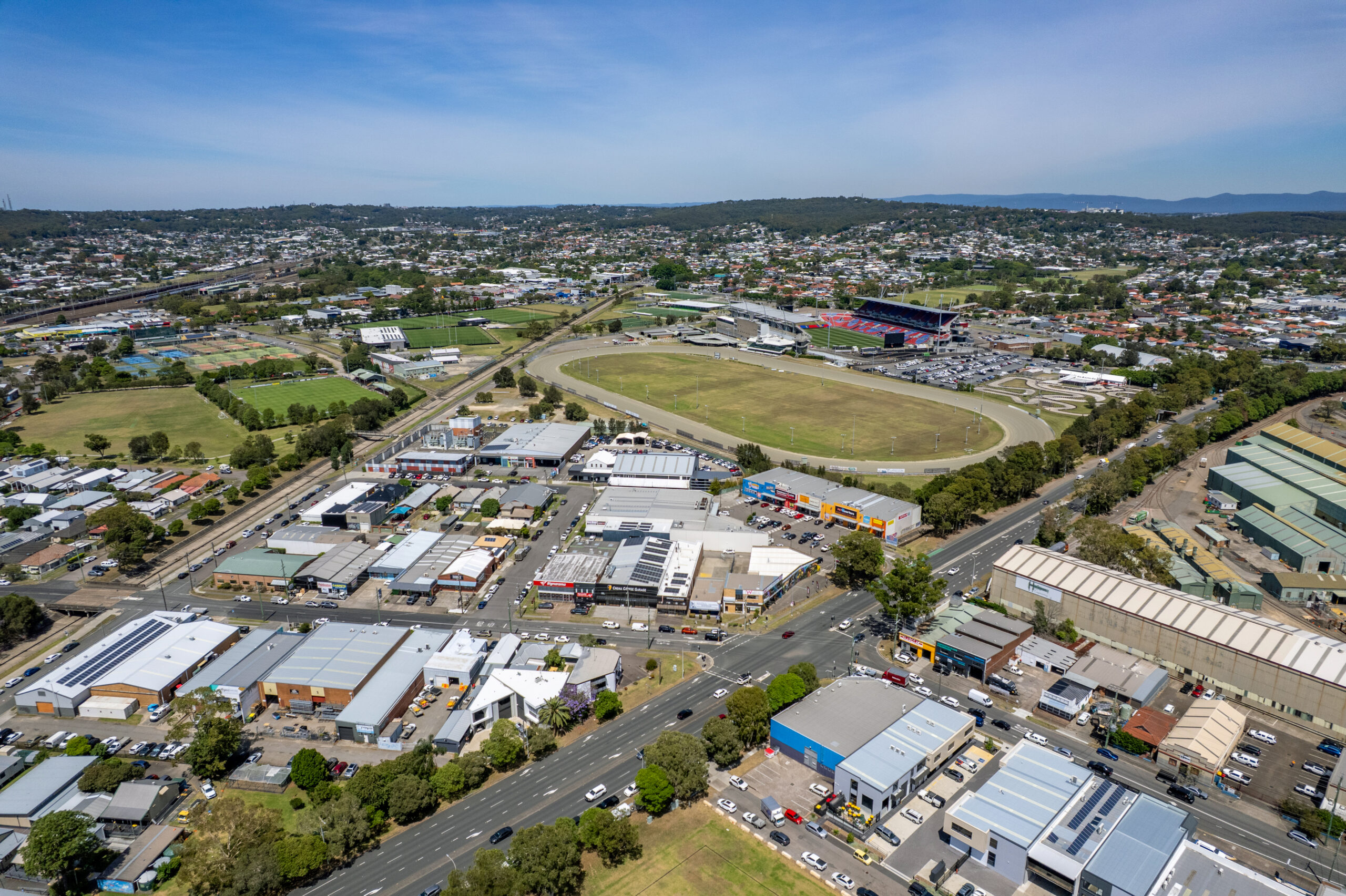
For several years, the conversation around Broadmeadow has focused on what the precinct could become. That conversation is beginning to change. The adoption of the Broadmeadow Place Strategy in March 2025 established the long-term direction for approximately 313 hectares of land, with capacity for up to 20,000 new homes, 15,000 jobs and a population of around 40,000 over the next 30 years.
Since then, the first government-owned sites have been rezoned, a delivery agency has been appointed and further infrastructure and design planning has progressed. For commercial property owners, this shift from strategy towards implementation is significant. Not because every property has suddenly received additional development potential, but because there is progressively more clarity around where growth will occur, how people will move through the precinct and the types of commercial activity that may be required to support it.
Broadmeadow's rezoning is only part of the story
The first Broadmeadow rezoning was finalised in August 2025 across four government-owned areas. It enables up to 3,200 new homes and approximately 2,350 jobs, with the Hunter and Central Coast Development Corporation appointed to coordinate planning and delivery across the rezoned land.
For private commercial property owners, an important distinction needs to be made, the Place Strategy itself has not automatically rezoned every property within Broadmeadow. Future changes to privately owned land will occur progressively through the planning process. However, focusing solely on whether an individual property has been rezoned can overlook a broader commercial property consideration.
As thousands of additional residents and workers are introduced into a precinct, the demand placed on surrounding land also changes. A growing population requires medical and allied health services, retail, hospitality, professional services, recreation, convenience uses and other forms of commercial space. New employment and entertainment destinations can also influence pedestrian movement, transport patterns and the locations businesses consider most desirable.
In other words, commercial property can be affected by redevelopment occurring around it, even before the planning controls applying to the property itself change.
Growth can change what a commercial property is worth for
This is where the longer-term discussion becomes more relevant for existing owners. A commercial property's value is not determined by its current building or tenant alone. Its underlying land, zoning, location, access and potential future use can become increasingly important as the surrounding market evolves.
Consider two properties within the same area. A modern, securely leased commercial investment may continue to derive most of its value from its existing income. An older building occupying a larger site near future transport, population or activity nodes may increasingly be considered for what the land could support over the longer term. Neither position is inherently better. They simply require different strategies.
This is also why factors such as site area, frontage, neighbouring ownership, vehicle access, lease expiry and the potential to consolidate adjoining holdings become increasingly relevant in renewal precincts. The strongest outcome for an owner may be to continue holding a well-performing asset. For another, it could mean repositioning the tenancy mix, undertaking improvements or considering redevelopment. In some circumstances, a site may become more strategically valuable to another buyer or neighbouring owner than it is in its existing configuration allowing the current owner to realise the value of the site now.
Private and public investment provides another indicator
Planning changes are only one measure of confidence in an emerging precinct. The approved commercial development at 127-145 Lambton Road provides an example of private capital already positioning within Broadmeadow. The approximately 6,400sqm site has approval for a Woolworths-led development incorporating a 3,400sqm supermarket alongside additional retail and commercial space.
Government investment is also progressing. In June 2026, almost $15 million was committed towards finalising the design of the proposed 12,000-seat Newcastle Arena immediately north of McDonald Jones Stadium. The City of Newcastle is also developing a Local Infrastructure Contributions Plan and preparing to commence an Urban Design Framework for the wider precinct.
None of these projects in isolation determines the value of an existing commercial property. Together, however, they provide greater visibility around the scale and direction of investment planned for Broadmeadow.
What should commercial property owners be considering now?
Broadmeadow's transformation will occur over decades, and the effect will not be uniform across the precinct or surrounding commercial markets. The defined Place Strategy area is primarily within Broadmeadow and Hamilton North, with smaller areas extending into New Lambton and other adjoining suburbs. Lambton sits outside the formal precinct boundary, although commercial property in surrounding areas may still be influenced by additional population, employment and activity generated nearby.
For owners, the more useful question is therefore not simply “Has my property been rezoned?”. It is whether the changing precinct alters the role that property could play over the next five, ten or twenty years. Understanding the property's current value, existing income, zoning and development constraints is the starting point. From there, owners can assess how future infrastructure, surrounding development and changing occupier demand may influence the decision to hold, improve, reposition or sell.
Broadmeadow is still at an early stage of a 30-year transformation. But with the first rezoning complete and delivery planning progressing, there is now more substance behind the long-term vision. For commercial property owners, that makes this the right time to understand not only what an asset is worth today, but how its position within a changing precinct could influence its longer-term potential.