Mid North Coast – A regional economy positioned for growth
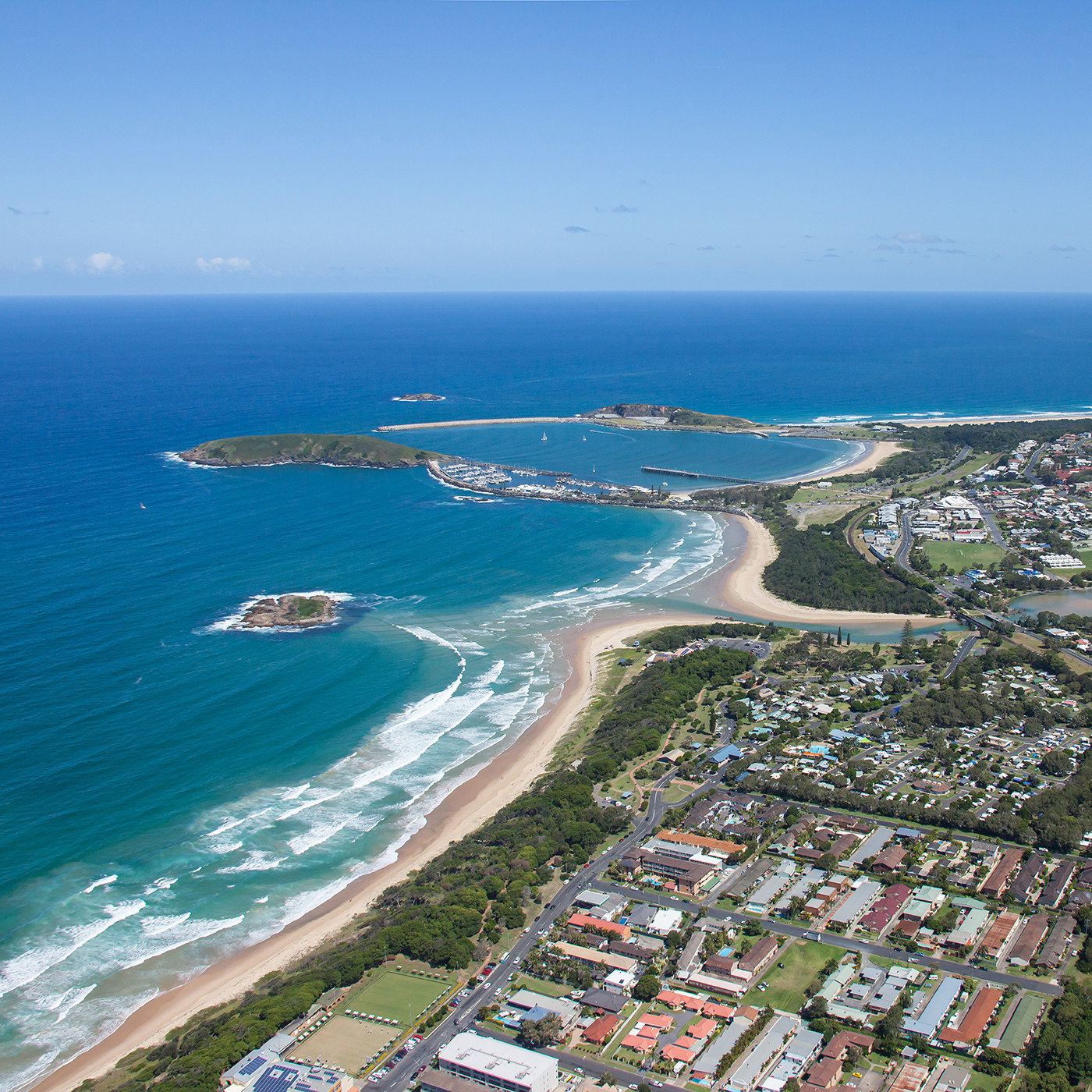
The Mid North Coast is emerging as an increasingly important regional market in NSW, supported by population growth, lifestyle-driven migration, a diverse economic base and significant investment in health, education, transport and community infrastructure. The region extends across Port Macquarie, Coffs Harbour, Taree, Forster-Tuncurry, Kempsey, Nambucca Heads and Bellingen.
The region has a population of approximately 229,000 people with a median age of 50 years. Its population profile reflects the region's strong appeal to retirees, families and lifestyle-driven residents, while its major centres provide employment, health, education, retail and commercial services to a much broader surrounding catchment (Australian Bureau of Statistics).
A diversified regional economy
The Mid North Coast economy is underpinned by a combination of healthcare and social assistance, construction, retail, tourism, agriculture, forestry, fishing, education and professional services. The region's natural environment is a major economic asset, supporting tourism, agriculture, commercial fishing and aquaculture, attracting residents seeking a coastal lifestyle (North Coast Regional Plan 2041).
Healthcare is particularly important to the region's economic outlook. An ageing population and increasing demand for regional health services are supporting continued investment in hospitals, medical facilities, retirement living and allied health services. The NSW Government is continuing the $265 million redevelopment of Port Macquarie Base Hospital, alongside a $263.8 million redevelopment of Grafton Hospital and further investment across the region's health network (NSW Government 2026-27 Budget).
The NSW Government's North Coast Regional Plan identifies health care, construction, accommodation, service industries, agribusiness, high-value food and beverage production, advanced manufacturing, tourism, freight and logistics and creative industries as areas of future economic opportunity (NSW Department of Planning).
Population and housing demand
Population growth is expected to remain a key driver of the Mid North Coast property market. The broader North Coast Regional Plan 2041 anticipates substantial population growth and requires planning for a minimum of 41,300 additional homes across the North Coast over the next 20 years. Port Macquarie and Coffs Harbour are identified as two of the region's principal growth centres, expected to accommodate population growth and provide employment, housing, education and health services (North Coast Regional Plan 2041).
This growth is creating demand across multiple property sectors, including residential development, neighbourhood retail, medical and allied health, childcare, industrial and business premises. Population growth and constrained supply of well-located land are expected to continue supporting development in established centres and strategic growth precincts.
Connectivity and infrastructure
The Mid North Coast benefits from its position on the Pacific Highway, providing a critical north-south connection between Sydney and Brisbane and supporting the movement of people, freight and goods throughout the region. The NSW Government identifies improved transport connections as an important enabler of economic growth, particularly for freight, tourism and regional employment (NSW Department of Planning).
Air connectivity strengthens the region's commercial proposition. Coffs Harbour and Port Macquarie airports provide regular connections to Sydney and other major centres, supporting business travel, tourism and access to regional markets. The broader North Coast is also positioned between the international gateways of Newcastle and the Gold Coast (NSW Department of Planning).
Government investment is further reinforcing the region's economic foundations. Across regional NSW, the 2026–27 State Budget includes $3 billion for regional hospitals and health facilities, $2.3 billion for schools and $910.9 million for the restoration of roads and essential public assets damaged by natural disasters (NSW Government 2026-27 Budget).
Commercial property outlook
For the commercial property market, the Mid North Coast presents a combination of established demand and longer-term growth potential. Port Macquarie and Coffs Harbour are the region's principal commercial hubs, while centres such as Taree, Forster-Tuncurry, Kempsey, Nambucca and Bellingen provide important secondary markets serving their respective local and regional catchments.
The market is increasingly supported by occupiers in healthcare, professional services, construction, retail, logistics and tourism-related industries. At the same time, population growth is creating opportunities for new retail, medical, industrial and mixed-use development.
The region's lifestyle appeal remains a significant competitive advantage. Access to beaches, national parks, waterways and established town centres continues to attract residents, visitors and businesses seeking an alternative to metropolitan markets. This is contributing to a broader shift in the region from a primarily tourism and retirement-driven economy towards a more diverse regional service economy.
Investment opportunity
The Mid North Coast is well positioned for continued investment as population growth, infrastructure spending and economic diversification translate into increased demand for commercial property. The strongest opportunities are likely to emerge in locations that combine population growth with established infrastructure, employment, transport connectivity and limited competing supply.
For investors and developers, the region offers exposure to a growing coastal market without the scale and pricing pressures of metropolitan NSW. Port Macquarie and Coffs Harbour are expected to remain the principal engines of growth, while established secondary centres provide opportunities across industrial, retail, office, medical and mixed-use assets.
Overall, the Mid North Coast is transitioning into a more sophisticated regional economy, underpinned by strong lifestyle fundamentals, essential service industries and significant public and private investment. As population and employment continue to expand, the region is expected to provide increasing opportunities for commercial property owners, investors and developers seeking exposure to long-term regional growth.